
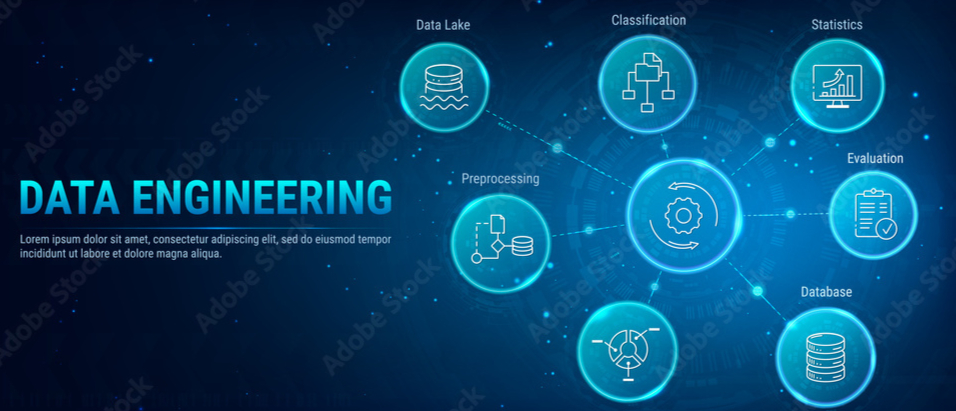
Data Engineering is the foundation of modern data-driven organizations, enabling the efficient collection, transformation, storage, and delivery of large-scale data for analytics and decision-making. Data engineers design and maintain robust data pipelines that integrate information from multiple sources, ensuring data quality, reliability, and accessibility across enterprise systems. By leveraging cloud platforms, distributed computing frameworks, and database technologies, data engineering supports scalable architectures capable of processing both structured and unstructured data in real time.
A strong data engineering ecosystem empowers businesses to unlock actionable insights, improve operational efficiency, and accelerate digital transformation initiatives. Data engineers work closely with data scientists, analysts, and business stakeholders to build data warehouses, implement ETL/ELT processes, and optimize data workflows for performance and governance. Technologies such as Apache Spark, Hadoop, Kafka, Snowflake, and cloud services from AWS, Azure, and Google Cloud play a critical role in managing high-volume, high-velocity data environments while ensuring security and compliance standards are maintained.
FAs organizations continue to adopt artificial intelligence, machine learning, and advanced analytics, the demand for scalable and reliable data infrastructure continues to grow. Data engineering enables seamless access to trusted data, supporting predictive analytics, business intelligence, and real-time reporting capabilities. With a focus on automation, data orchestration, and modernization, data engineering serves as a strategic pillar for innovation, helping enterprises make informed decisions, enhance customer experiences, and maintain a competitive advantage in the digital economy.
 Real-Time Data Processing – Analyze streaming data instantly for faster decision-making.Predictive & Prescriptive Analytics – Use machine learning to forecast trends and optimize strategies.Data Warehousing & ETL – Efficient data storage and transformation using cloud or on-premise platforms. Advanced Visualization Dashboards – Interactive dashboards and reports using Power BI, Tableau, and custom tools. Scalable Architecture – Solutions built on Apache Hadoop, Spark, AWS, or Azure to handle growing data volumes.